
Asheboro Resident Lookup Records
Asheboro official records answer narrow questions. The Randolph Property Search can connect a name or address with an Asheboro taxable parcel, owner, mailing destination, deed tab, and map, but a tax card does not prove that someone currently lives there. The North Carolina Voter Lookup can show public registration details, while Asheboro court and deed indexes identify a party to a case or recorded instrument. Keep those labels intact. An Asheboro taxpayer, voter, grantor, registered agent, or court party is not automatically a current resident.
| Record | What It Confirms | Where | Access |
|---|---|---|---|
| Asheboro tax parcel | Taxpayer or owner, plus mailing and situs relationship | Randolph PWA/GIS | Free search; daily-changing tax data |
| Asheboro voter record | Registration status, public address, districts, and history | NCSBE Voter Lookup | Free individual search; ACP limits apply |
| Asheboro court docket | Public party, case, events, and disposition | NC eCourts and Clerk | Free summary; clerk controls copies |
| Asheboro recorded deed or plat | Named legal party and property transaction | Randolph Register of Deeds | Online and office path; older-book limits |
| Asheboro vital or obituary clue | An event or family-history lead | ROD, state records, library | Inspection and certified-copy rules differ |
| Asheboro business or license filing | Official entity or credential relationship | NC SOS and NC BOLD | Free search; not a residence finding |
Start with the Asheboro source that matches the fact already known. An Asheboro address fits the property search; an Asheboro case number fits eCourts; an Asheboro birth, death, or marriage question belongs with the proper vital-record custodian. That sequence keeps an Asheboro resident lookup focused and avoids merging unrelated same-name results.
Asheboro Voter Lookup Boundaries
The Asheboro voter lookup requires first name, last name, and a voter-status choice. Middle initial, year of birth, and county can narrow an Asheboro search. An Asheboro public record may include status, party, precinct and other jurisdictions, polling location, sample-ballot information when available, ballot-by-mail status, and voting history. Voting history identifies participation metadata, not ballot choices. An Asheboro record may also lag a move or administrative change, so it should be checked with another source when identity matters.
N.C.G.S. §163-82.10 makes Asheboro county voter lists available while protecting full dates of birth, Social Security information, driver-license data, email, and other confidential fields. Address Confidentiality Program participants and certain protected Asheboro voters can keep the actual address from public display. The Asheboro-area Board of Elections can explain a county or precinct-list request and its actual-cost rules, but the individual portal is not an anonymous street-browse tool.
Note: A Removed or Denied status is administrative information, not a finding about a person's conduct or current location.
Search Asheboro eCourts Parties
North Carolina eCourts Smart Search accepts an Asheboro party name or case number. Advanced filters can narrow civil actions, nonconfidential special proceedings, estates, and criminal matters by location, case type, status, or filing-date range. Asheboro party criteria can include first, middle, and last names, a business name, date-of-birth filtering, and other interface options. A wildcard needs at least three last-name characters and one first-name character, while an Asheboro case-number wildcard needs at least four characters before the asterisk.
An Asheboro public result is a near-real-time register of actions. It can show a case number, type, location, assignment, parties, causes of action, events, hearings, dispositions, financial entries, and party details, although a result can omit a category with no data. Victims are excluded from public displays. The portal is useful for a narrow Asheboro name check, not for proving that every same-name result belongs to one person.
The North Carolina eCourts landing page is the source for the following eCourts access image.
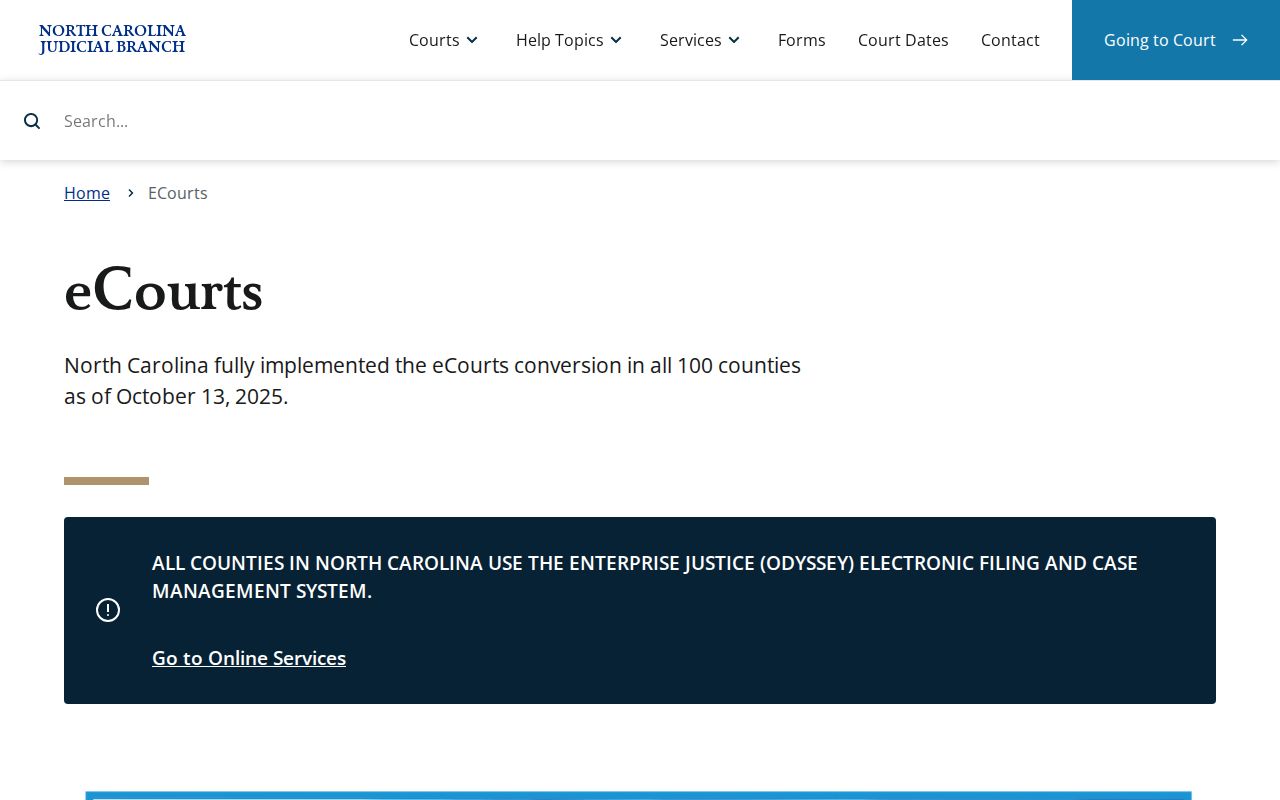
Use an Asheboro portal result to collect a case number and court location, then compare that information with the named party and a separate Asheboro public record.
| eCourts result field | How to read it |
|---|---|
| Case number and type | Identifies the matter and its court classification. |
| Parties and role | Shows a public relationship to the case, not identity by itself. |
| Events, hearings, disposition | Places the case in procedural context and may show an outcome. |
| Location and assignment | Helps distinguish a Randolph matter from a similar name elsewhere. |
Verify an Asheboro Resident Lookup
An Asheboro same-name match needs a deliberate check. Record the exact spelling, initials, and each Asheboro source date. Then compare an Asheboro county, age or year-of-birth clue where lawfully public, an address type, a party role, a parcel, or a business affiliation. An old Asheboro directory address, tax mailing address, parcel situs, and registered office describe different things. Two independent Asheboro custodians are a better minimum than two records from one compiled source.
- Search the Asheboro property card or voter record and write down the relationship shown, such as taxpayer, mailing destination, or registration status.
- Run eCourts for the full name and sensible Asheboro spelling variants, then use county, case type, and party role to screen out false matches.
- Check an Asheboro recorded deed, obituary index, or public entity filing only when it supplies a second, relevant connection.
- For the official Asheboro document or a correction question, contact the custodian that holds the underlying record rather than relying on the display.
- Docket
- A court's running public list of a case, its parties, filings, events, and outcome information.
- Index versus image
- An index points to a record and key fields; an image is the scanned document itself and may have separate access limits.
- Certified copy
- A copy issued and certified by the custodian for an official purpose, rather than an informal portal printout.
Asheboro Court File Access
The Randolph County Clerk of Superior Court is the custodian of Asheboro court, probate, estate, divorce, and related case files. The Asheboro courthouse public terminal can search by defendant name, case number, and victim or witness name. Asheboro paper files remain with the clerk, and clerk staff can explain copying or certification fees. eCourts does not replace the Asheboro custodian when a reader needs the actual file, a certified copy, or clarification of a result.
North Carolina's court-records instructions show the official request route represented in this image.
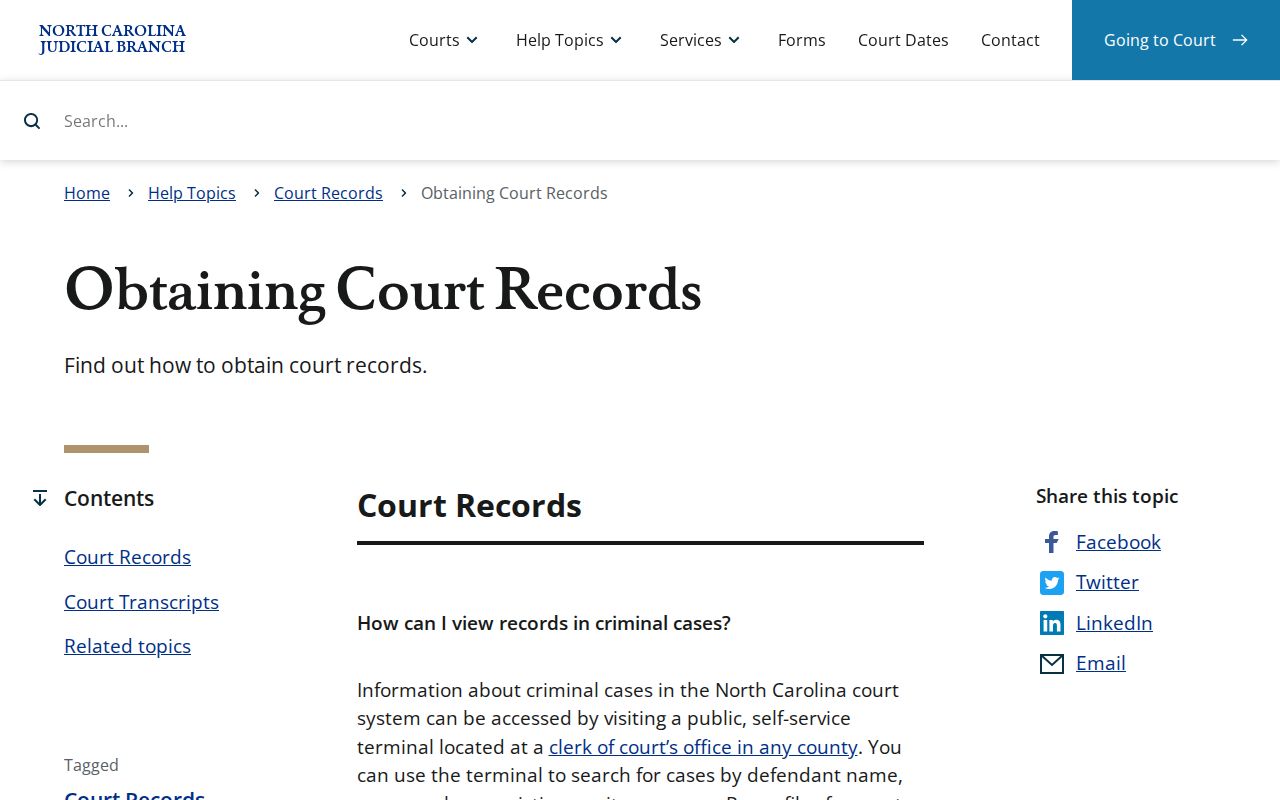
Older, restricted, sealed, juvenile, expunged, adoption, and protected family-law material may not be publicly available.
Asheboro Vital and Heir Clues
The Randolph Register of Deeds vital-record service distinguishes Asheboro public inspection from an eligible certified-copy request. Asheboro birth, death, and marriage records support event questions, not an unrestricted name database. Certified copies require the listed relationship or authority, photo identification, and the Asheboro local form or order procedure. The county's online order route is paid and is not a free name-search index.
For a family-history trail, an obituary index can identify the newspaper date, page, and death date. That lead can be followed to microfilm at the Randolph Room, then to a Clerk probate docket or file if an estate is relevant. Restricted or sealed portions stay closed. Pre-1913 births, pre-1930 deaths, pre-1962 marriages, and pre-1958 divorces follow the older routing described by state and county custodians.
Asheboro Business Record Roles
The North Carolina Secretary of State business search can identify an entity's legal name, SOSID, status, formation information, registered agent, offices, officers, and filing history. The assumed-name search adds a state route for DBA records. Those details can help separate two people with the same name, but an entity role or registered office is not evidence that a person lives at that address.
NC BOLD is a keyword and license search that routes to the appropriate board. License fields vary by board, so a license result should remain a license affiliation rather than a claim about a current address or personal history.
Asheboro eCourts Record Change
North Carolina completed eCourts implementation in all 100 counties on October 13, 2025. Randolph began its Track 6 digital-record transition in October 2024. That recent change explains why a current portal search and an older paper file may look different. It does not change the Clerk's role as custodian or turn a portal summary into a certified record.
When the portal cannot answer a focused question, use a written request under N.C.G.S. Chapter 132 for existing records from the right office. Agencies must respond promptly or as soon as reasonably possible, may charge actual reproduction or extensive-service costs, and do not have to create a new report. NCAOC's public-records request information applies to its own records, while case documents belong with the Clerk.
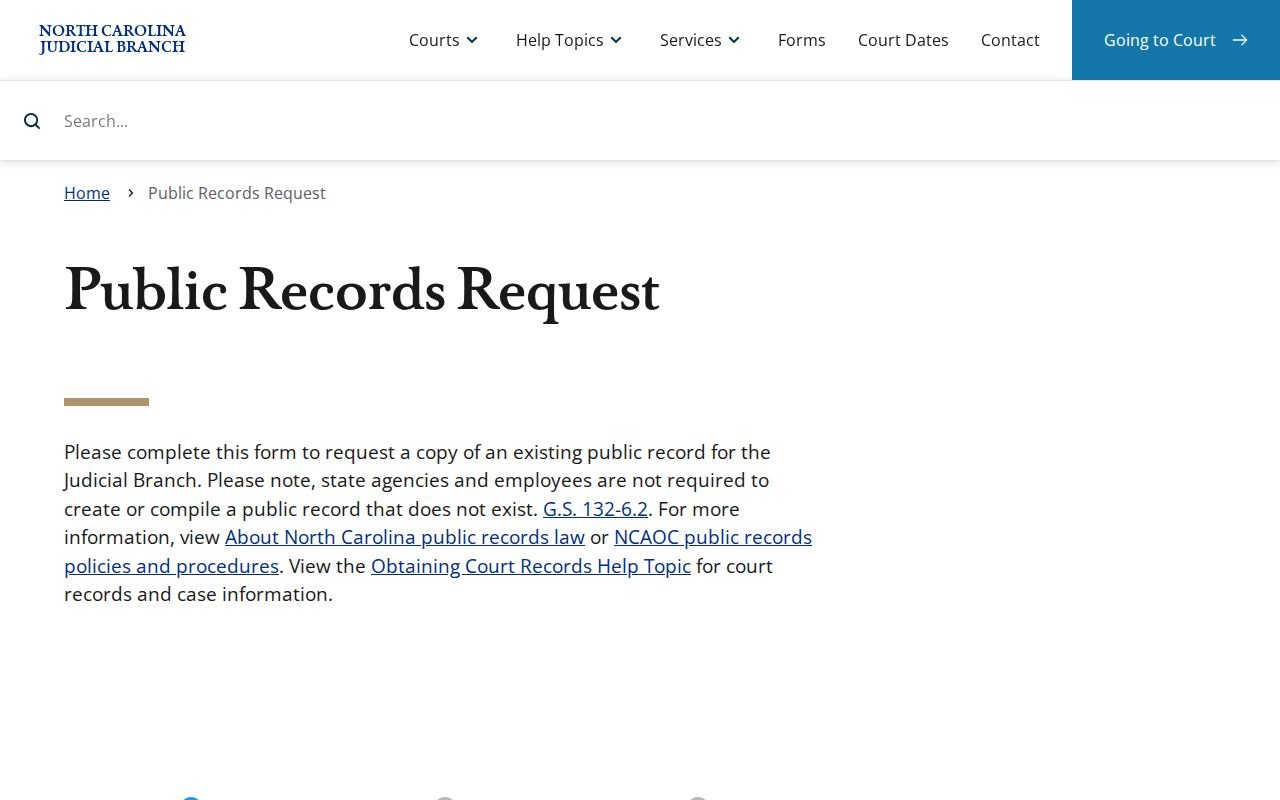
A focused request names the record, date range, and custodian, which is more useful than asking an office to assemble a new profile.
Asheboro Resident Lookup Limits
North Carolina protects full dates of birth, Social Security numbers, driver-license details, medical information, adoption material, and protected addresses from ordinary public use. The North Carolina Address Confidentiality Program provides a substitute address for eligible survivors who apply through an application assistant. Do not attempt to fill gaps around an ACP or court-protected address with nearby records.
The state registry has a limited public-safety role and is not a general identity tool. NC SBI's registry page supplies the source image that follows and covers registrants, not every person with a criminal record. A booking, registry entry, or docket allegation must never be treated as a conclusion beyond its stated status.
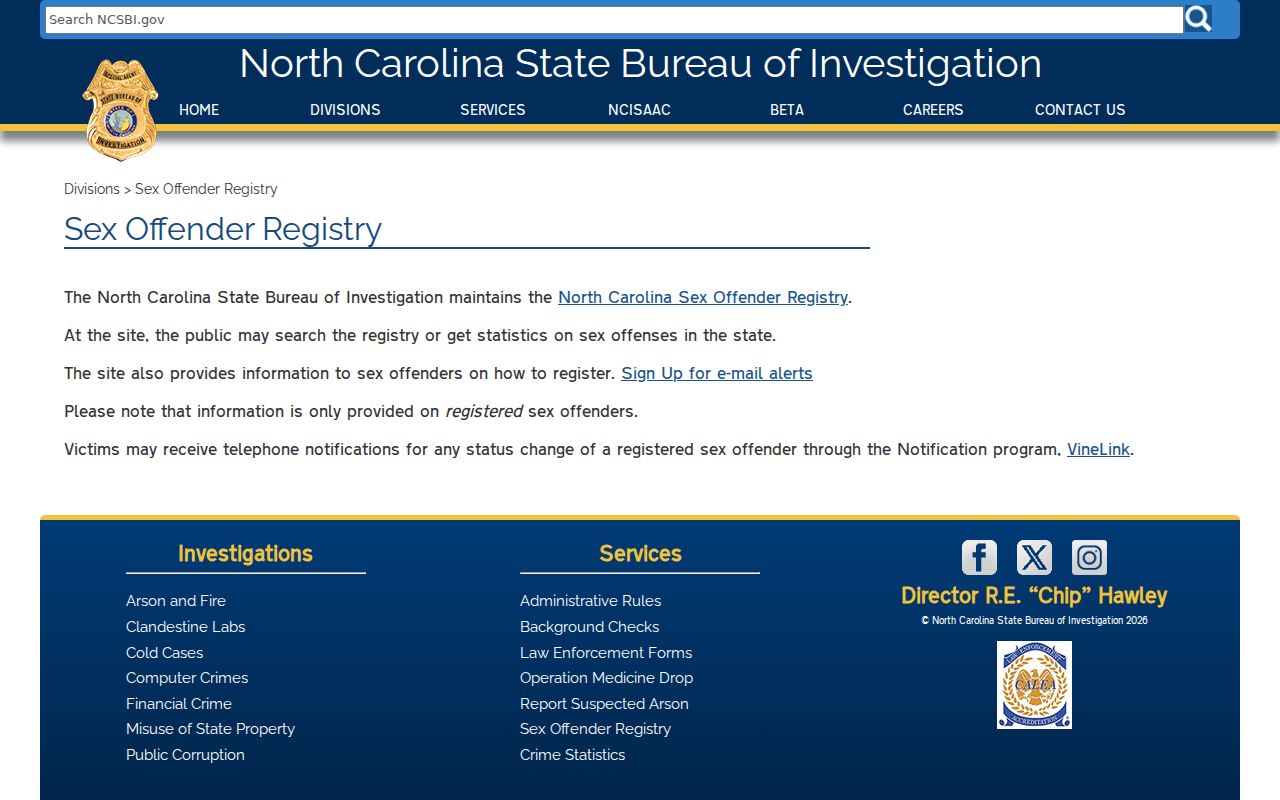
Use only the lawful purpose described by the responsible agency and leave protected information out of any notes.
Lawful use. Use Asheboro public records for personal, lawful research and label each source accurately. Using a record trail to stalk, harass, intimidate, or harm anyone is prohibited under North Carolina law.